
When choosing food packaging equipment, many manufacturers compare tray sealing machines with a Continuous MAP Packaging Machine. Although both are used to seal food in trays, they differ in packaging functions, production efficiency, and suitability for different food processing businesses.
Tray sealing machines are commonly used to close trays with a sealing film, while modified atmosphere packaging (MAP) equipment can replace the air inside a package with a controlled gas mixture to help preserve food quality and extend shelf life. Understanding these differences can help you choose the right packaging solution for your production line.
What Is a Continuous MAP Packaging Machine?
А Continuous MAP Packaging Machine is designed for food packaging operations that require modified atmosphere packaging and continuous production. It replaces some or most of the air inside a package with a selected gas mixture before sealing the tray, depending on the machine’s operating principle and configuration.
Common gases used in MAP include nitrogen (N₂), carbon dioxide (CO₂), and, for certain products, oxygen (O₂). The appropriate gas composition depends on the food type, microbial risks, desired product appearance, and storage conditions.
By controlling the atmosphere inside the sealed package, MAP packaging can help maintain food quality and extend shelf life when the gas mixture, packaging materials, temperature, and hygiene practices are properly selected.
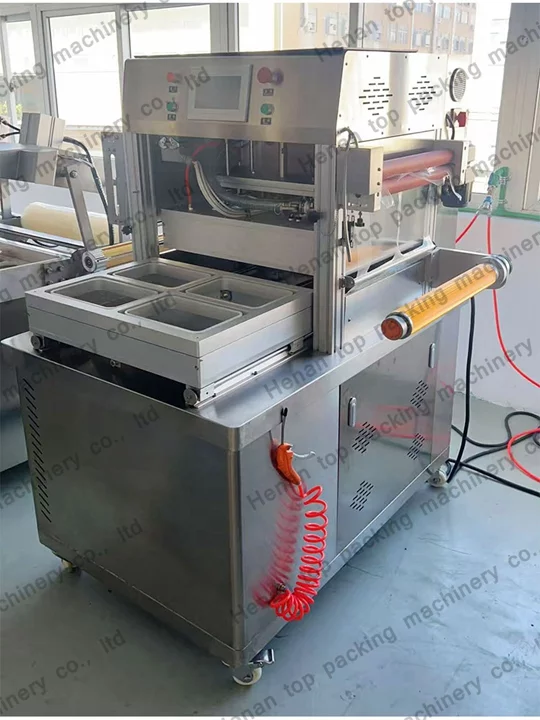
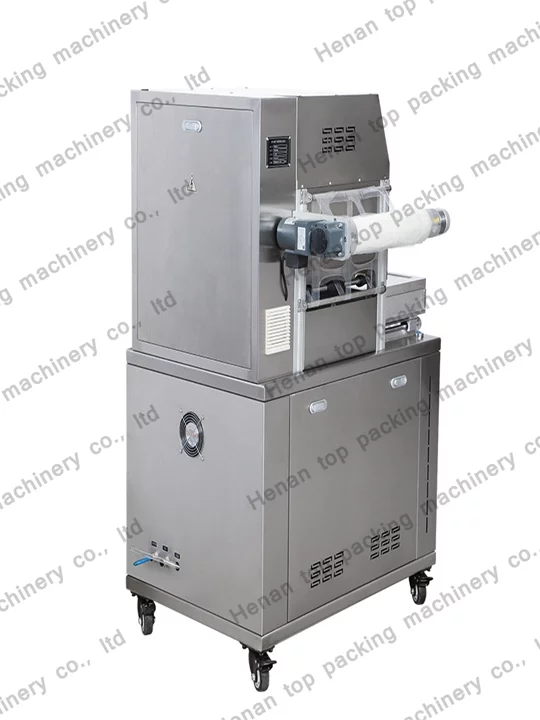
Tray Sealing vs. Continuous MAP Packaging Machine: Key Differences
Although the two machines may look similar, their core functions and production capabilities are not necessarily the same.
| Comparison | Standard Tray Sealing Machine | Continuous MAP Packaging Machine |
|---|---|---|
| Main function | Seals film onto food trays | Replaces package air with gas and seals the trays |
| Air inside the package | Generally remains inside unless additional functions are provided | Replaced with a selected gas mixture |
| Shelf-life support | Depends on food handling, packaging, and storage conditions | Can help extend shelf life when MAP is correctly designed and controlled |
| Production method | May be manual, semi-automatic, or automatic | Designed for continuous or higher-volume production, depending on the model |
| Typical applications | Fresh foods, prepared foods, and retail food trays | Fresh meat, seafood, ready meals, and other foods requiring MAP |
| Equipment investment | Varies with automation and optional functions | Generally depends on gas-control systems, automation, output, and configuration |
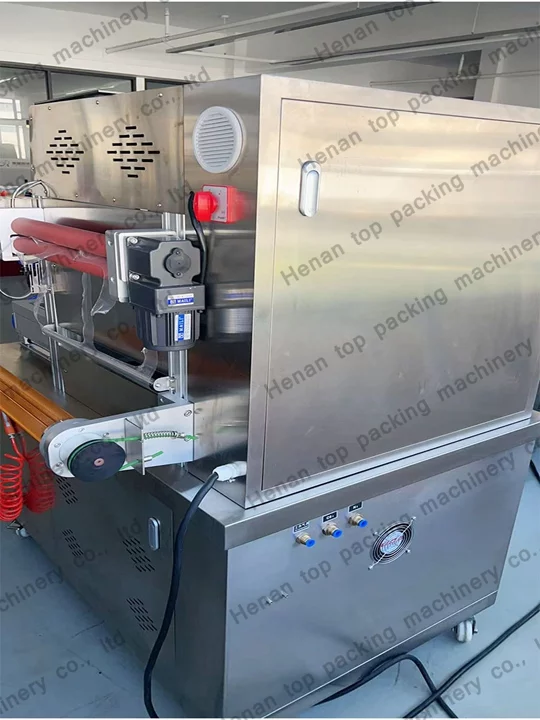
The key difference is that tray sealing describes a sealing operation, while MAP describes a packaging method that controls the atmosphere inside the package.
Some tray sealing machines also support MAP, so these categories are not mutually exclusive. The actual capabilities depend on the selected model.
Which Machine Is Better for Your Food Business?
The best option depends on your products, daily output, packaging requirements, and budget.
Choose a Continuous MAP Packaging Machine If:
- Your products need a controlled gas atmosphere inside the package.
- You process fresh meat, poultry, seafood, or other foods that benefit from MAP.
- You need consistent packaging for larger production volumes.
- You want to improve packaging-line efficiency through automation.
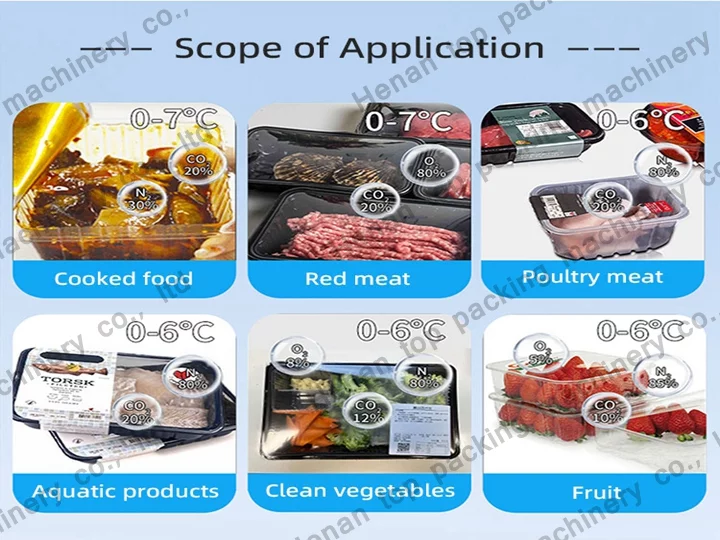
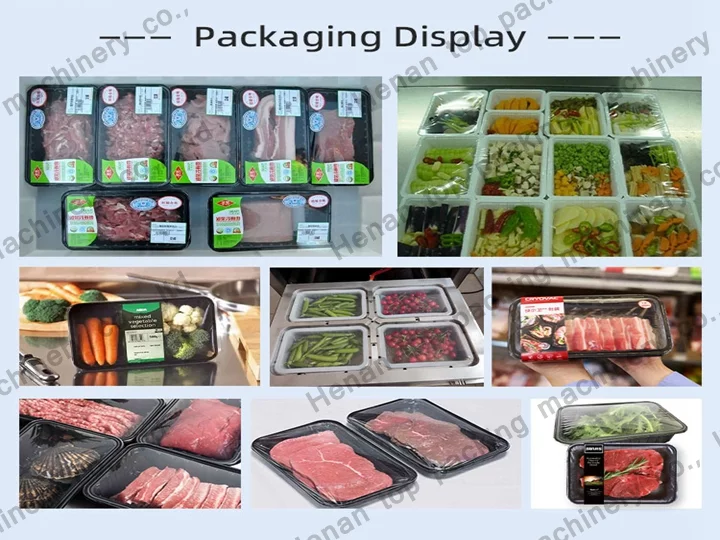
For example, a meat processing plant supplying supermarkets may consider continuous MAP equipment to package fresh meat in trays while managing gas replacement and sealing as part of one production process.
Before making a purchase, confirm the machine’s actual packaging cycle, output per hour, tray dimensions, gas consumption, and compatibility with your existing production line.
How Does MAP Packaging Help Preserve Food?
Modified atmosphere packaging works by changing the gas composition inside a package. Different gases serve different purposes, and the correct combination depends on the food being packaged.
- Carbon dioxide (CO₂): Can inhibit the growth of many spoilage microorganisms in suitable food applications.
- Nitrogen (N₂): Often used as an inert filler gas to reduce oxygen levels and help prevent package collapse in suitable applications.
- Oxygen (O₂): May be used for specific products, such as certain fresh meats, when maintaining color is important.
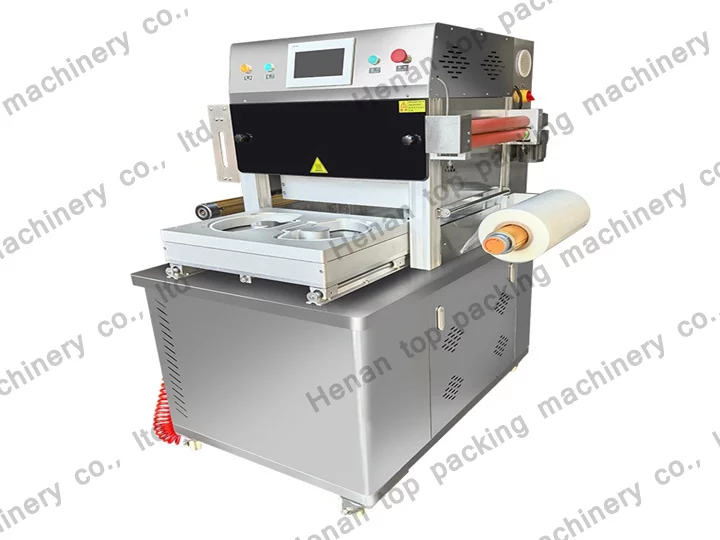
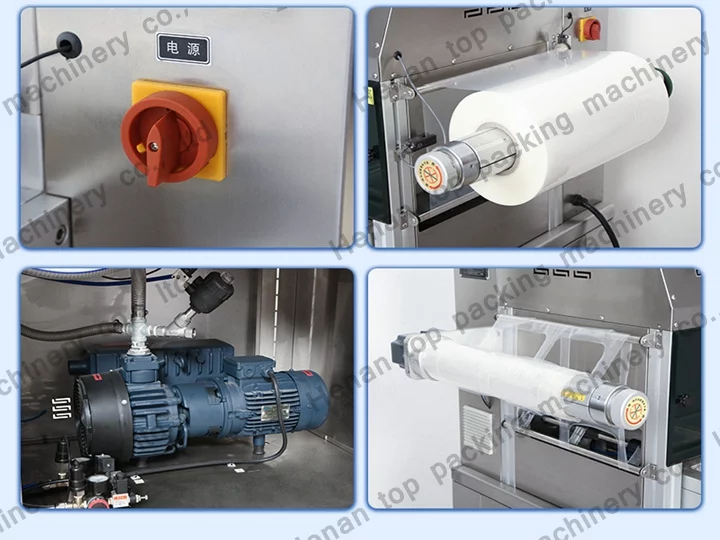
MAP does not sterilize food or eliminate the need for refrigeration. Its effectiveness depends on the product, gas composition, film barrier properties, sealing quality, hygiene, and storage temperature. Food businesses should validate their packaging process for the specific products they handle.
Заключение
A standard tray sealing machine is suitable for businesses that mainly need to seal food trays, while a Continuous MAP Packaging Machine is a better option when controlled gas replacement and continuous production are important requirements. However, some tray sealing machines also offer MAP functions, so buyers should compare the specific features of each model rather than relying on the machine name alone.
If you are looking for food packaging equipment, consider your product type, required output, tray specifications, and shelf-life goals before selecting a machine. Contact our team to discuss your packaging requirements and find a suitable solution for your food processing business.